The Moment of Truth: How Winemakers Know When to Harvest
Sugar, acidity, weather, hungry birds and a little bit of nerve—inside the decisions that determine when grapes finally leave the vine.
Originally published in STROLL Grasslands
This article first appeared in STROLL Grasslands, a publication associated with The N2 Company. It has been lightly adapted for A Well-Poured Life.
When you think of autumn, what comes to mind? Perhaps it’s cooler temperatures, changing leaves, football or even the return of our Florida snowbirds. In vineyards across the Northern Hemisphere, however, autumn means something far more urgent and exciting: harvest season.
The vineyard’s annual cycle begins with pruning during the winter dormant months, followed by bud break and flowering in spring, then fruit set and veraison—when grapes begin changing color and accumulating sugar—in summer.
Harvest truly is the culmination of an entire year’s work.
For thousands of years, grape harvests have brought families and communities together to pick fruit, share meals and occasionally stomp around barefoot in large containers of grapes. Long before grape stomping became a cheerful tourist photo, it was actual work.
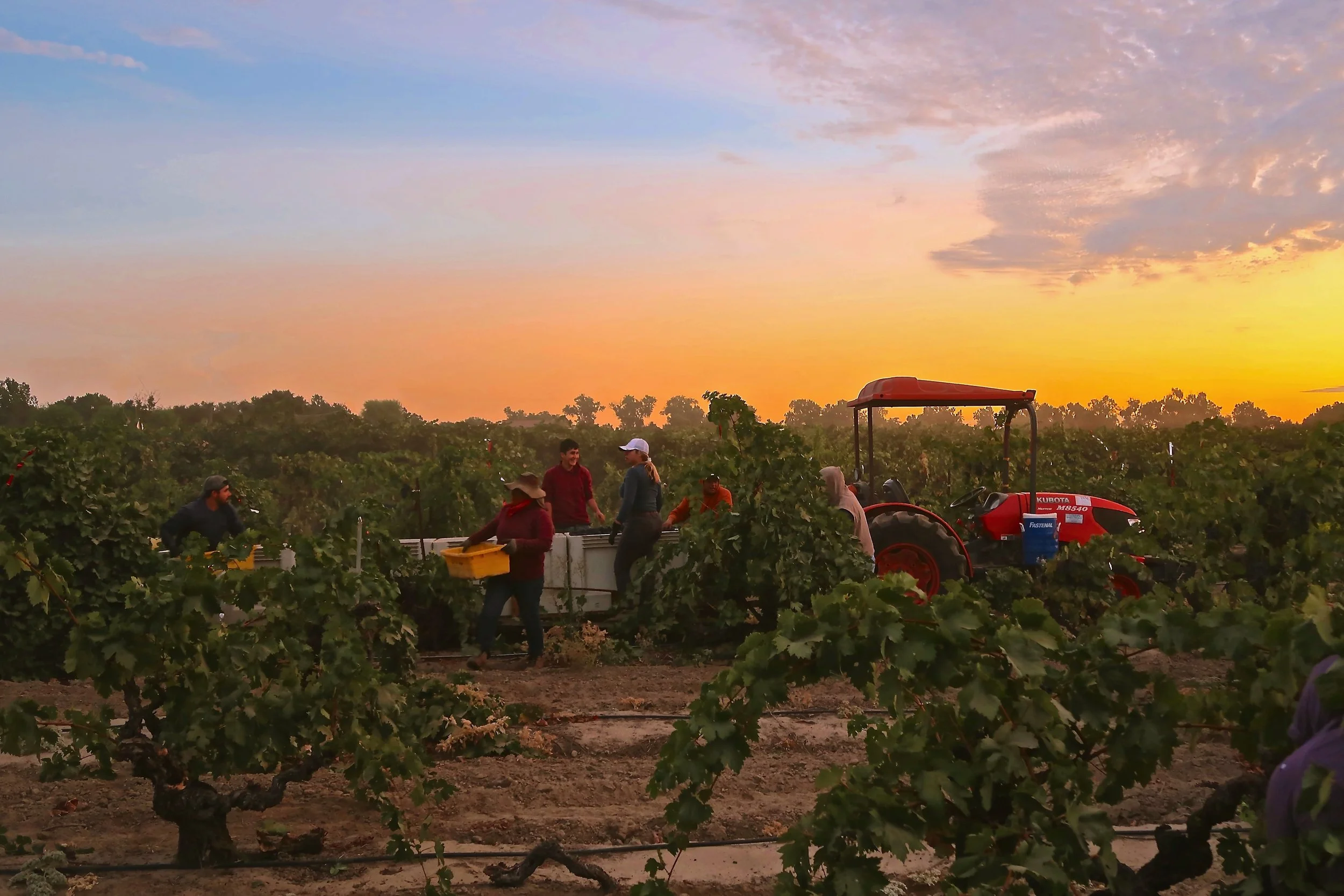
Zinfandel harvest at Faith Vineyard, Lodi, California. Photo: Randy Caparoso / Wikimedia Commons, CC BY-SA 4.0. Cropped
The Moment of Truth
This is where science meets instinct.
Winemakers track sugar levels as grapes ripen, but sugar is only part of the equation. Acidity is dropping at the same time, tannins are maturing, flavors are developing, and seeds and stems are changing too.
The numbers can tell you a lot—but eventually someone has to taste the grapes.
A winemaker may walk the vineyard sampling berries from different rows, tasting the fruit, chewing the skins and even crunching the seeds. They’re looking for that elusive balance between ripe fruit, fresh acidity and mature tannins.
And sometimes the difference between “not quite” and “pick them now” is only a few days.
And Then Mother Nature Gets a Vote
As harvest approaches, the list of potential troublemakers grows. Rain can swell or split the berries and dilute their flavors, heat can turn ripe grapes into raisins, humidity can invite mold, and wildfires may introduce smoke taint.
Then there are birds and other pests that find ripe grapes every bit as delicious as we do.
Fun fact: Some California growers use trained falcons to discourage hungry pests from helping themselves to the vintage.
Even if the fruit remains healthy, growers still need enough people, bins, trucks and winery space to bring it all in—and the grapes wait for no one.
One Harvest, Many Timelines
California provides a perfect example of how long and varied harvest can be.
In Napa Valley, grapes destined for sparkling wine are generally among the first picked, often beginning in early August while acidity is still high. Red varieties come later, with Cabernet Sauvignon among the last to reach full maturity. In some years, harvest can stretch into late October or beyond.
One winery may already be fermenting Chardonnay while another is still nervously watching Cabernet hang on the vine.
Regional traditions and regulations can shape harvest, too. In Champagne, for example, the entire harvest must be picked by hand. The clusters need to arrive at the press whole and intact, particularly important when producing white Champagne from dark-skinned Pinot Noir and Meunier grapes.
And then, after all that worrying, watching and waiting...
When Harvest Becomes a Celebration
Getting the grapes safely off the vine is reason enough for a party—and wine regions around the world have developed their own ways of celebrating it.

Fiesta de la Vendimia in Toro, Spain. Photo: Rastrojo / Wikimedia Commons, CC BY-SA 4.0. Cropped
In Toro, Spain, the annual Fiesta de la Vendimia turns harvest into a community celebration rooted in the region’s agricultural past. Its centerpiece is a procession of traditional animal-drawn carts loaded with baskets of grapes. Participants dress in old-fashioned harvest clothing and carry baskets filled with the foods workers traditionally took into the vineyards—bread, cheese, cured meats and, naturally, wine.
The celebration looks different a little farther north in Rioja. During Logroño’s San Mateo harvest festivities, grapes are traditionally crushed barefoot and the first must of the season is presented to the Virgin of Valvanera, patroness of La Rioja. The ceremony remains one of the central events of the annual festival.
Different traditions, same basic idea: after an entire growing season spent worrying about frost, rain, heat, pests and exactly when to pick, getting the harvest in is worth celebrating.
Part Science, Part Experience, Part Gamble
Despite modern testing, weather technology and harvesting equipment, choosing the perfect moment to pick remains part science, part experience and part gamble.
Every bottle begins with someone standing in a vineyard, tasting a grape and deciding that the moment has finally arrived.
So, the next time you open a bottle, raise a glass to harvest season—and to everyone who watched the weather forecast obsessively to make it possible.
Cheers!
