The Loire Valley: Where Wine, Castles, and Goat Cheese Happily Coexist
One river, dozens of wine styles, Renaissance royalty, spectacular châteaux and enough chèvre to justify opening another bottle.
Originally published in STROLL Grasslands
This article first appeared in STROLL Grasslands, a publication associated with The N2 Company. It has been adapted for A Well-Poured Life.
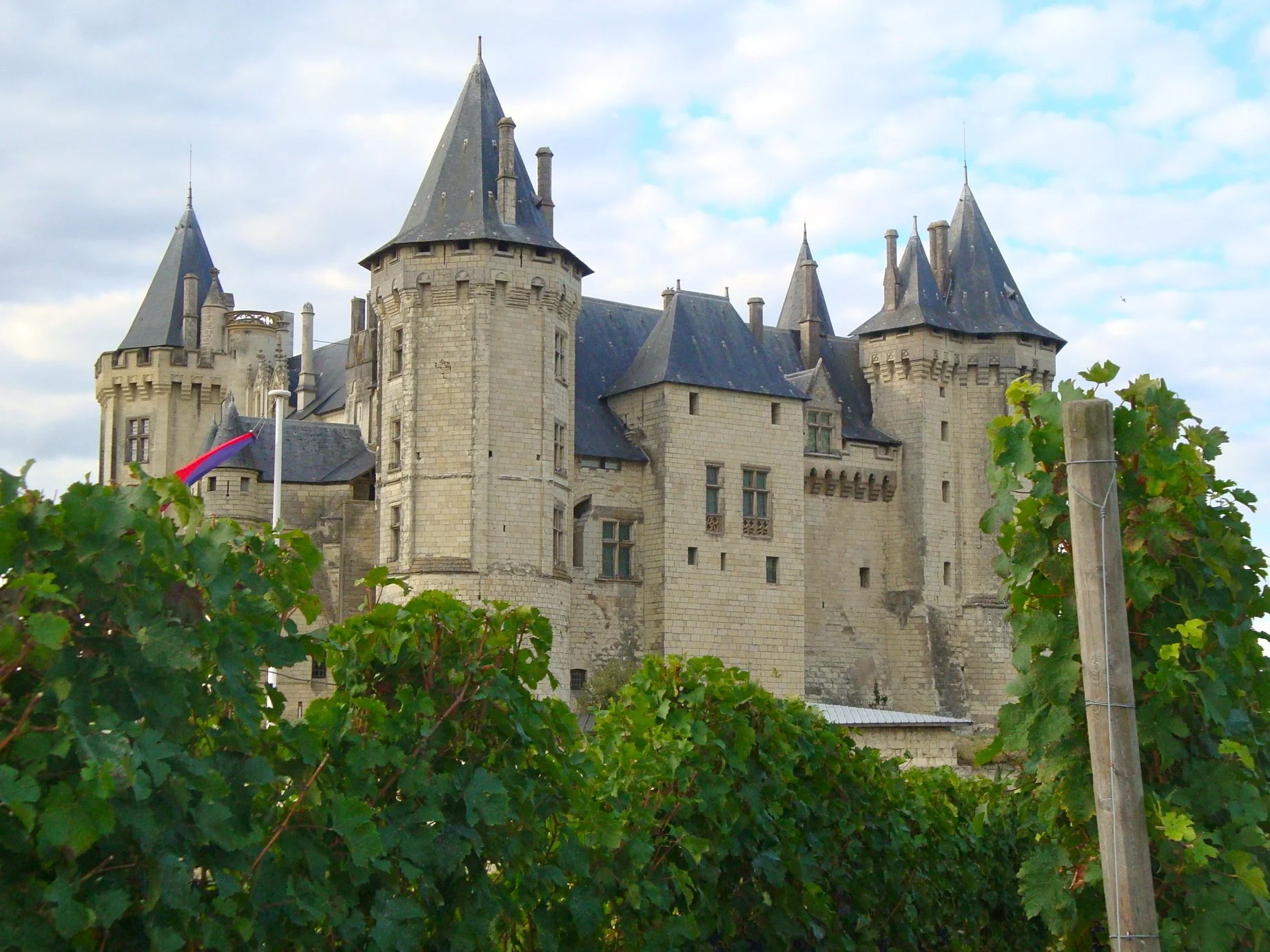
Vineyards surrounding the Château de Saumur in the Loire Valley. Photo: Patrick Drackley / Wikimedia Commons, CC BY-SA 3.0
I haven’t made it to the Loire Valley—yet. But it sits very high on my list. And really, what’s not to love? Wine, castles, beautiful countryside and an alarming amount of very good goat cheese. This feels less like a vacation and more like a personal itinerary waiting to happen.
The Loire River travels more than 600 miles across France before reaching the Atlantic, with vineyards, historic towns, and spectacular chateaux scattered along much of its course. Known as the “Garden of France,” the region is lush, fertile and remarkably diverse. UNESCO designated a large portion of the central Loire Valley a World Heritage Site for its extraordinary cultural landscape—a place shaped over centuries by the relationship between the river, the land and the people who settled along it.
And then there’s the wine.
One River, A Lot of Wine
Trying to describe “Loire Valley wine” as though it were one thing is a little like trying to describe “California wine.” Technically possible. Not terribly useful.
Follow the river from its eastern vineyards toward the Atlantic and the grapes, climate and wine styles change right along with the scenery. Sauvignon Blanc shines in places like Sancerre and Pouilly-Fumé. Chenin Blanc and Cabernet Franc take center stage farther west. Near the Atlantic, Melon Blanc becomes Muscadet. Along the way you’ll encounter sparkling wine, rosé, sweet wine and plenty of bottles that don't fit neatly into anyone's expectations.
Which, frankly, is part of the fun.
Sancerre is probably one of the Loire's best-known names. Made primarily from Sauvignon Blanc, the whites are generally crisp and dry, with citrus, green fruit and sometimes a distinctive flinty or mineral character. Across the river, Pouilly-Fumé offers its own expression of Sauvignon Blanc.
But if Sauvignon Blanc is the familiar face of the Loire, Chenin Blanc may be its overachiever.
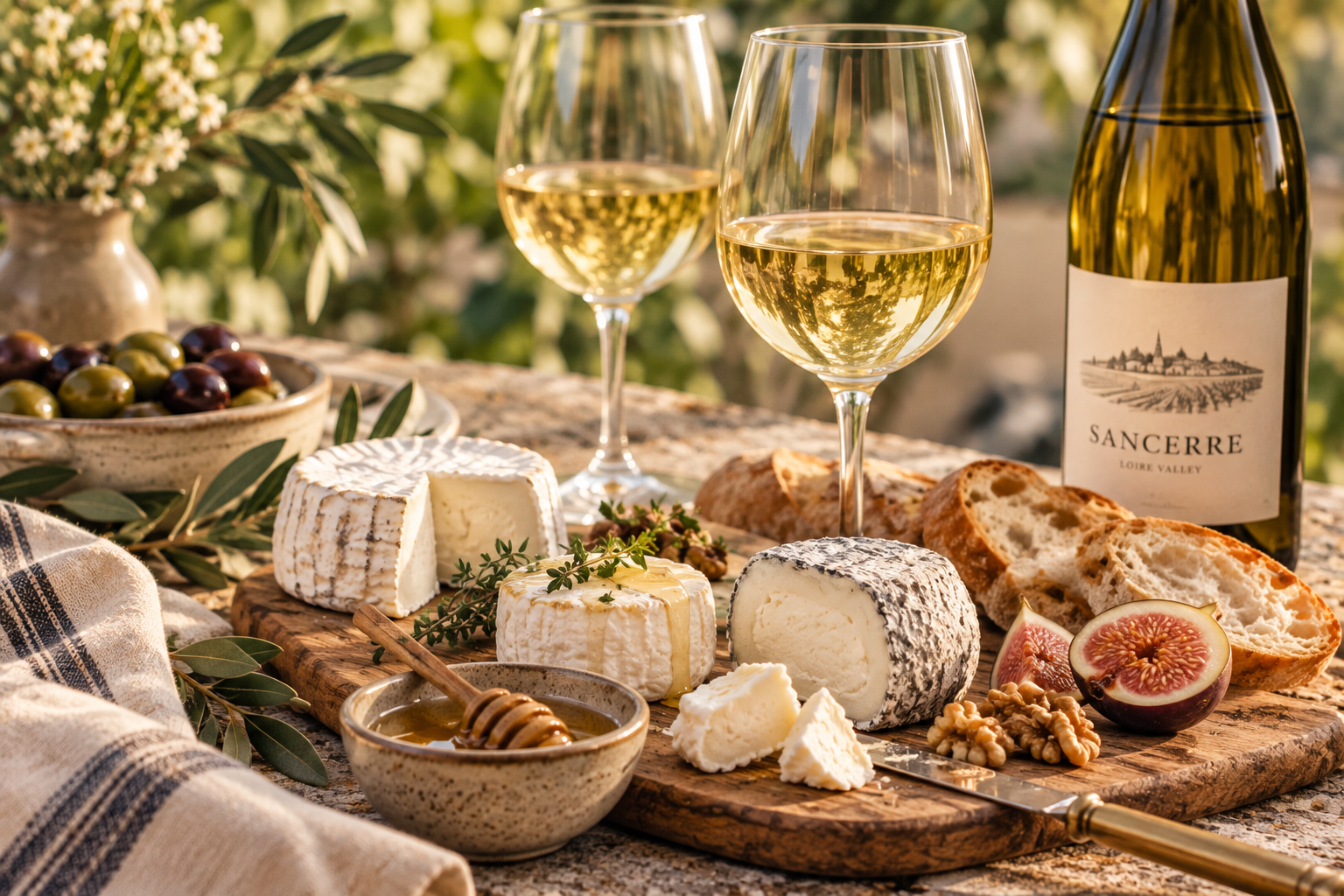
Sancerre wine and a collection of goat cheese, fruit, and bread
In Vouvray, Chenin can produce everything from dry wines to lusciously sweet versions—and sparkling wine, too. Its naturally high acidity helps keep even sweeter styles feeling fresh rather than heavy. Depending on where and how it's made, you may find apple, pear, quince, honey and floral notes, sometimes developing richer, more complex flavors with age.
Then there’s Muscadet, which deserves a small confession from me.
Before studying for my recent WSET Level 3 exam, Muscadet wasn’t on my radar at all. Then I tasted Muscadet Sèvre et Maine Sur Lie and had one of those wonderful wine moments when you are completely surprised in the best way. Made from Melon Blanc near the Loire's Atlantic end, Muscadet can be light, crisp and almost saline. Wines labeled sur lie spend time resting on the spent yeast after fermentation, which adds texture and subtle complexity. Pair a chilled bottle with a plate of oysters or other fresh seafood and suddenly it’s very easy to understand why this wine has such loyal fans.
This is one of the things I love most about learning about wine: occasionally a bottle comes along and politely informs you that you didn't know nearly as much as you thought you did.
The Loire isn't only about white wine, either. Cabernet Franc is an important player, particularly around Chinon, Bourgueil and Saumur-Champigny. Compared with some of the fuller-bodied reds people may be accustomed to, Loire Cabernet Franc can feel wonderfully fresh and aromatic, with red fruit, herbal notes and an earthy edge. If you enjoy red wine but don't necessarily want something enormous in your glass, this is a very interesting place to explore.
Even the Loire's pink wines refuse to fit into one box.
Rosé de Loire is dry, while Rosé d'Anjou and Cabernet d'Anjou retain varying amounts of sweetness. In a world where we've somehow decided that sophisticated rosé must always be bone-dry and nearly colorless, the Loire offers a useful reminder: sweetness isn't a flaw. It's a style choice – and with the right food, it can be a very good one.
A little sweetness can be terrific with spicy food, salty charcuterie or dishes that play with sweet and savory flavors. A dry Loire rosé, meanwhile, is perfectly happy alongside seafood, salads, or an afternoon that doesn’t require much of an excuse to open a bottle.
And if bubbles are your thing—and they are certainly one of mine—the Loire has you covered there, too. Crémant de Loire offers traditional-method sparkling wine without requiring a Champagne-sized budget. Chenin Blanc often plays an important role, sometimes alongside Chardonnay and other permitted local grapes. It's an excellent reminder that France's sparkling-wine story extends well beyond Champagne.
Castles, Kings, and a little Leonardo
Of course, no trip to the Loire Valley is complete without visiting the region's greatest attractions: the châteaux.
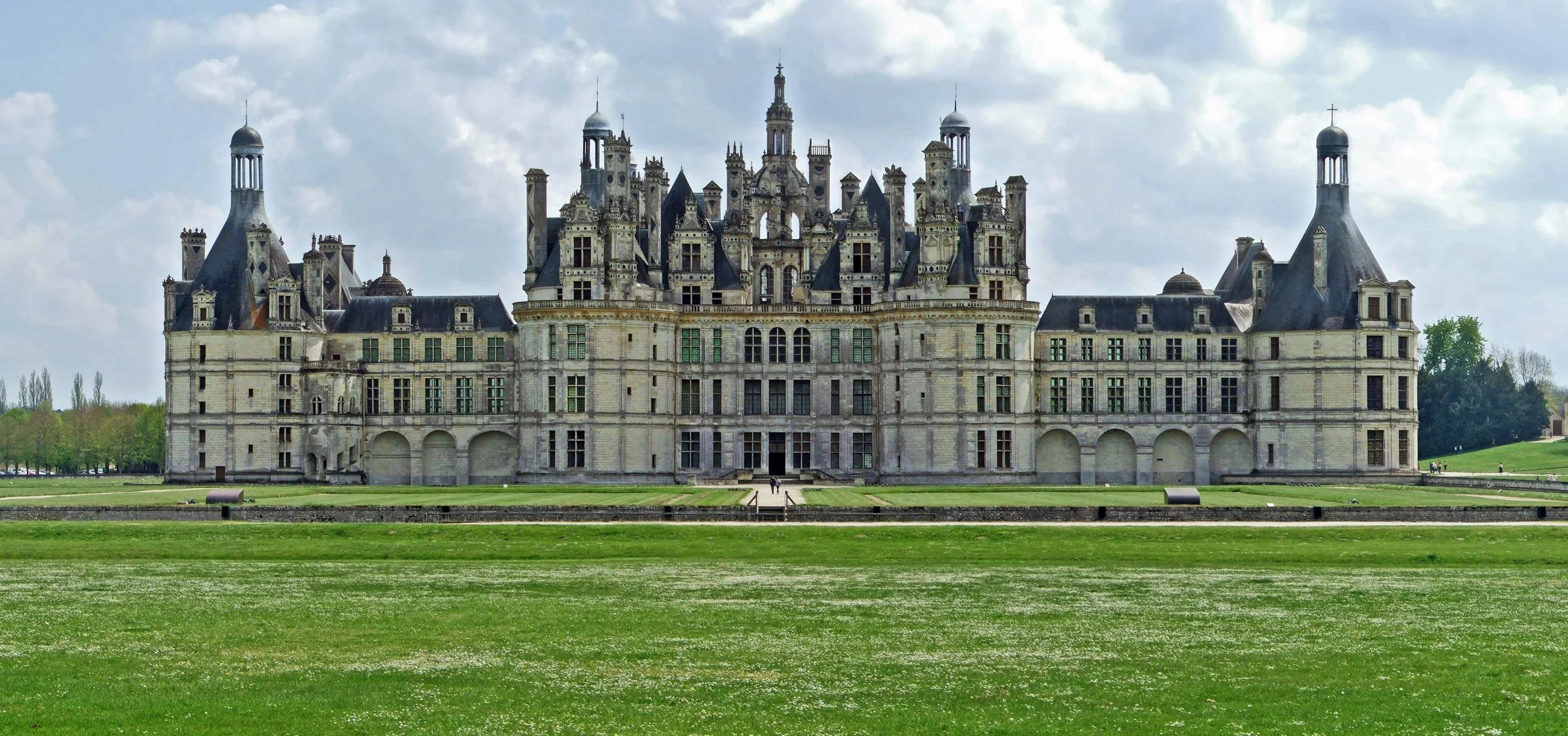
North-west façade of Château de Chambord. Photo: Krzysztof Golik / Wikimedia Commons, CC BY-SA 4.0.
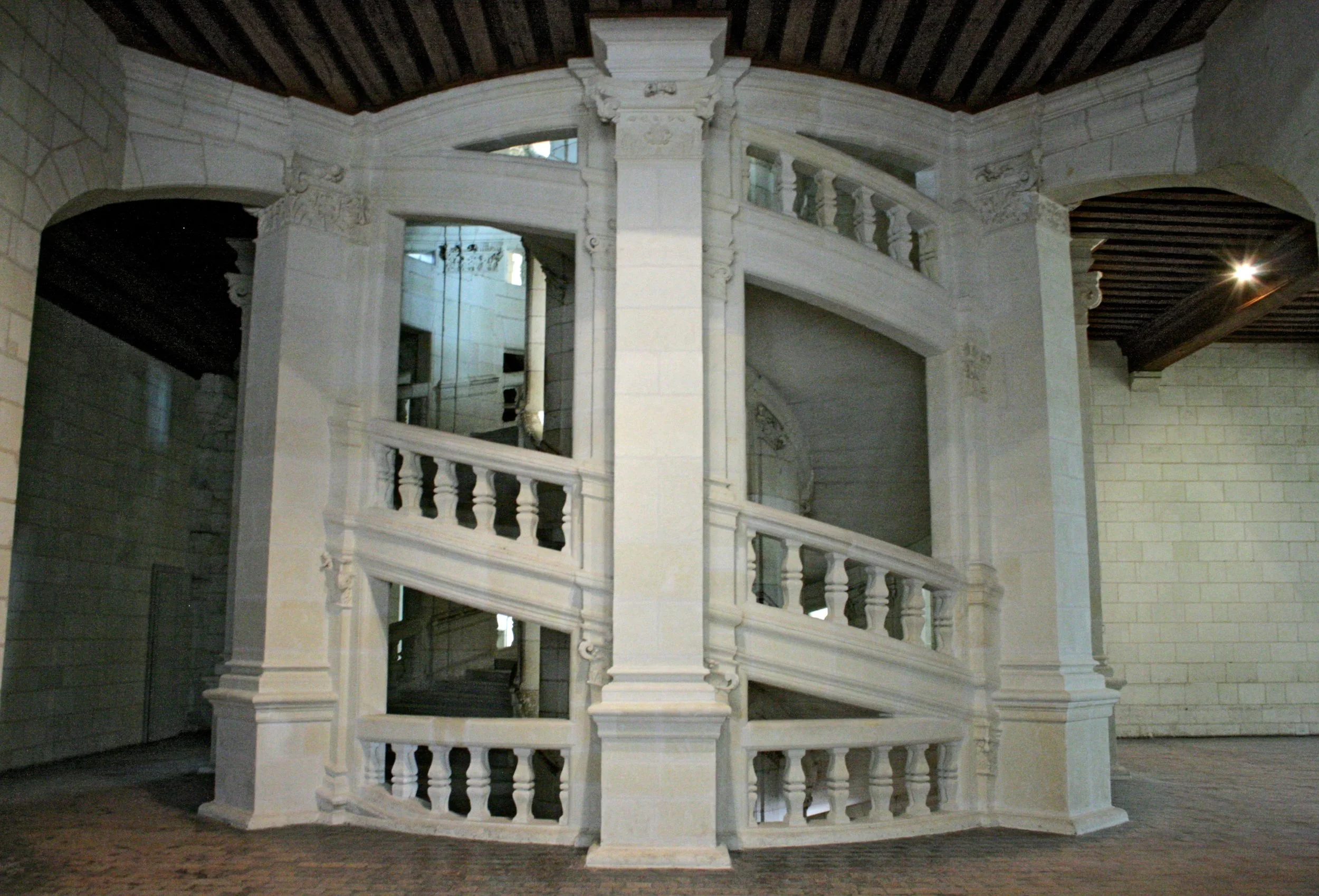
Central double-helix staircase at Château de Chambord. Photo: Hélène Rival / Wikimedia Commons, CC BY-SA 3.0.
This is royal France on a grand scale. More than 100 châteaux are open to visitors throughout the Loire Valley, including Chambord, Chenonceau, Amboise, Blois and Azay-le-Rideau. Their architecture tells the story of a period when the French court spent considerable time in the Loire and Renaissance ideas flowing north from Italy began transforming French art and architecture.
Château de Chambord may be the ultimate example. King François I commissioned it beginning in 1519—not primarily as a permanent home, but as an extraordinary display of royal ambition. François had invited Leonardo da Vinci to France a few years earlier, and Leonardo's influence can be seen in Chambord’s design – most famously in its ingenious double-helix staircase.
Yes, that Leonardo da Vinci.
Wine, castles and Leonardo. The Loire does not lack range.
And neither does its food.
A Very Good Excuse to Eat Goat Cheese
The region has an extraordinary goat-cheese tradition, with five cheeses holding protected PDO/AOP status. One of the most famous, Crottin de Chavignol, comes from the hills around Sancerre itself.
Which means the classic pairing of Sancerre and chèvre isn't simply a clever combination dreamed up by a sommelier. The wine and cheese genuinely share a landscape.
There are others worth knowing simply because they're delicious—and because French cheese apparently has no interest in being boring. Sainte-Maure de Touraine traditionally has a straw running through its center, while Pouligny-Saint-Pierre is instantly recognizable by its pyramid shape.
Suddenly a cheese board feels educational.
That's perhaps what makes the Loire so appealing to me. There’s an elegance to the region, but not necessarily the intimidation factor that can accompany some of France's more famous wine destinations. You can start with a grape you already know—Sauvignon Blanc, perhaps—and then wander.
Try Chenin Blanc in a style you haven't had before. Order Cabernet Franc when everyone else is drinking something heavier. Give an off-dry rosé a chance. Definitely consider Muscadet. Drink sparkling wine on a Tuesday simply because you can. Frankly, that last one should probably be a life goal!
Wine doesn't always have to be about finding the “best” bottle. Sometimes it's about discovering the bottle you didn't expect to like.
And the Loire seems particularly good at surprises.
Until I finally make the trip myself, I’m perfectly happy bringing a little of the Loire to us. Grab a bottle of Sancerre, Vouvray, Chinon—or, if you're feeling adventurous, Muscadet Sèvre et Maine Sur Lie. Add some goat cheese and a baguette. Maybe pull up a picture of Chambord for atmosphere.
It isn't quite the French countryside.
But with the right bottle, it's not a bad place to start.
Cheers!
